
USCG Captain Len Tumbarello
By: Chase Muro
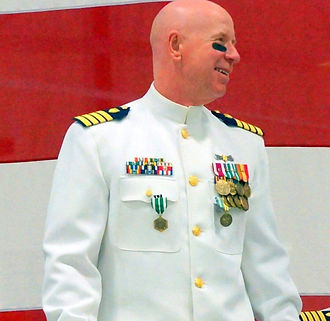
When Len Tumbarello accepted the role of leading the seamanship program at Tongue Point Job Corps, he wasn't simply teaching students how to work aboard ships.
He was helping them change the direction of their lives.
Job Corps serves young adults from underserved communities, providing education and career training that can open doors to stable, well-paying careers. At Tongue Point, students between the ages of 18 and 24 trained to become credentialed merchant mariners, entering an industry where starting salaries often ranged from $70,000 to $90,000 a year.
For many of them, it was a once-in-a-lifetime opportunity.
Len knew teaching them how to tie knots, navigate waterways, throw lines, or paint vessels wasn't enough.
The bigger challenge was teaching them how to become professionals.
Building People First
When Len first arrived, he spent a week asking himself one question.
"How do I build the best seamen known to mankind?"
At first, the answer seemed obvious.
Teach them the technical skills.
But the longer he thought about it, the more he realized the real answer had very little to do with boats.
"The knot tying and the line throwing and the painting, the hard skills, were secondary to the soft skills," Len said.
Instead, he built the entire culture around four core values:
Proficiency.
Professionalism.
People.
Passion.
Proficiency meant striving to become excellent at your craft.
Professionalism meant treating everyone with dignity and respect.
People reminded students that success depended on working together.
Passion meant waking up every morning believing that your future could be different than your past.
"You've got to be your biggest cheerleader," Len said.
Those values transformed the program.
By the time Len retired, the seamanship program had achieved a 95 percent completion rate and a 95 percent placement rate into the maritime industry.
But those numbers only tell part of the story.
The Knock on the Door
One student still stands out to Len.
His name was Mario.
Mario had been involved with a gang in Los Angeles before arriving at Job Corps. He stood roughly 6-foot-4 and weighed around 300 pounds.
One evening, Len informed Mario that because he had not passed his required math and reading exams, he would begin attending classes after dinner until he passed.
Mario was furious.
Evenings were when he worked out.
He refused.
Len calmly gave him two choices.
"You can go to math and reading classes tonight," he told him, "or you can walk up the hill, leave through the front gate, and go back where you came from."
Mario stormed out.
Everyone else had already gone home.
Len sat alone in his office wondering if he had just made the situation worse.
Then came a quiet knock.
"Captain... do you have a second?"
It was Mario.
"I'm going to math and reading classes."
Looking back, Len says that moment reinforced one of the biggest leadership lessons of his life.
"I learned it's better not to yell."
Instead of trying to overpower people, he simply laid out the facts.
"I'm not the bad guy," he said. "I'm telling you the options and what I believe is the best option for you. What you choose is up to you."
Many of his students had never experienced that kind of leadership before.
"A lot of them never had a father who held them accountable and loved them," Len said.
He discovered something surprising.
"When you held them accountable and made them be disciplined, they loved it. They craved it because they'd never had it before."
Winning the Day
Len has spent most of his life competing.
He played sports growing up.
He coached soccer, baseball, and basketball while raising his children.
Today, he still plays softball, lifts weights, enjoys racquetball, and carries roughly a four handicap on the golf course.
That competitive mindset has followed him everywhere.
"I look at every day as a competition," he said. "I want to win the day."
Some days are better than others.
"There are days where I think, 'Man, I got smacked around today.'"
But losing one day doesn't mean you've lost the bigger picture.
Len believes success is rarely dramatic.
Instead, it comes from small victories stacked together over months and years.
"Success isn't one day you're unsuccessful and tomorrow you are," he said. "It's a bunch of little days put together over a period of time."
When asked what advice he would give his 20-year-old self, Len didn't hesitate.
"Go grit, no quit."
He also believes that one of the greatest compliments someone can receive has nothing to do with awards or titles.
"When somebody says your name," Len said, "I hope the first thing they say is, 'He gets stuff done.'"
A Lighthouse at Home
Although Len has spent decades leading others, he says the greatest influence in his own life has been much closer to home.
His wife, Holly.
The two started dating as sophomores in high school in 1982.
This December, they'll celebrate 37 years of marriage.
"We've been together 44 years," Len said with a smile.
He calls Holly his "guiding light."
His lighthouse.
But there is another person who continues shaping his life every single day.
His father.
Shortly after Len graduated from the Coast Guard Academy, his father passed away from a massive heart attack at just 46 years old.
Len was only 22.
Today, decades later, he still thinks about him often.
"I can't hug him. I can't buy him a gift," Len said. "But I can keep making him proud."
That thought continues motivating him long after his father's passing.
Success at Home
Ask Len about his proudest accomplishments, and he doesn't start with the Coast Guard.
He talks about his family.
His oldest daughter, Angela, works as a medical assistant.
His daughter Chelsea earned a master's degree in speech-language pathology and now helps children overcome communication challenges.
His son Tony graduated from Oregon State University with a business and marketing degree and now works at Boise State University.
None of them followed Len into military service.
Because of all the moves required during his Coast Guard career, Len believes they valued stability and wanted to stay close to family.
His goals for them have always been simple.
"All I've ever wanted as a father is for them to be happy, self-sustaining, and, most importantly, good people."
Making the Dash Count
Every interview for Everyone Has a Story ends with the same question.
What does "Everyone Has a Story" mean to you?
Len paused before answering.
Then he talked about a tombstone.
"Everybody has a birth year," he said.
"And then there's a little dash."
That dash represents every conversation, every relationship, every failure, every accomplishment, every sacrifice, and every act of service between birth and death.
Some people simply exist during that dash.
Others choose to make it count.
"I think about that dash on a regular basis," Len said.
"I want my dash to be something dashing."
After hearing Len Tumbarello's story, it's hard to argue that it hasn't been.
From a young athlete growing up in St. Louis, to a Coast Guard captain, to a husband, father, mentor, and leader within Oregon's maritime community, Len has spent a lifetime investing in people.
His story, which he also shared in his 2019 lecture, "From the Midwest to the Coast," traces that remarkable journey through photographs and memories spanning more than three decades of service, leadership, and family life. The presentation offers another window into the experiences that shaped the man behind the title.
If you'd like to see another side of Len's work, Oregon Public Broadcasting also produced a short feature on the Tongue Point Job Corps Seamanship Program. The video highlights the students, instructors, and hands-on maritime training that changed so many lives.
Watching it makes it easy to understand why Len believed he wasn't just teaching seamanship... He was helping young people build a future.
Additional Resources
▶ OPB Feature
Tongue Point Job Corps: Teaching the Skills of Seamanship
https://www.opb.org/video/2020/06/02/tongue-point-job-corps-teaching-the-skills-of-seamanship/
▶ Lecture Presentation - Click Link Below
"From the Midwest to the Coast"
Now and Then Lecture Series (February 5, 2019)
As our conversation came to a close, one thing became clear: Len Tumbarello's greatest accomplishment isn't found in the rank he earned or the positions he held. It's found in the lives he helped steer in the right direction.
And in many ways, that's exactly what a captain is meant to do.
------
Thank you for your service, Captain, and thank you for taking the time to meet with me. I truly appreciate it. Thank you as well for reminding me what true service means and what it means to be an American. I'd love the opportunity to challenge you to a round at Astoria Country Club sometime.